
With summer here, that means cloudless skies. Well, mostly depending on where you are of course.
And that also means starry, starry nights. Which means it’s a good time to revisit the subject of astrophotography, especially following the recent interest in the Aurora many witnessed over the last week.
Basics
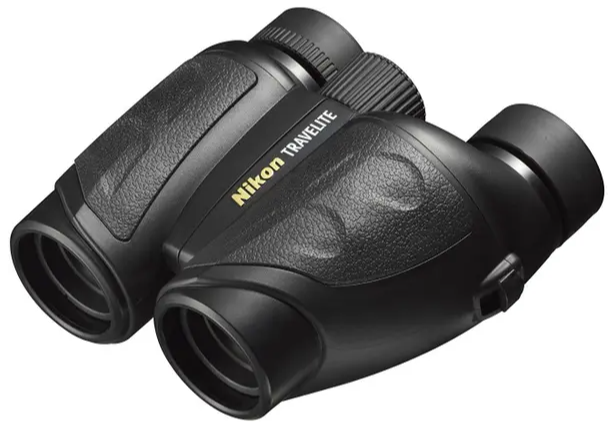
At its very basic, you can get some really good observing only with a decent pair of binoculars from Nikon, Fujifilm, Celestron and Olympus, and pay anything from $30 to $1300 depending on the quality, magnification and other factors. If you can find them, some pairs such as the DEV-50V from Sony can even record footage while viewing.
If you own a later GoPro, there is a star trails mode letting you capture a long exposure shot, or you can mimic this equally well with a dSLR or mirrorless camera by tweaking the aperture, shutter speed and ISO settings.
And of course, with a longer tele lens, you can get some glorious moon shots, best shot at half moon not the full moon as they tend to get over exposed as it is brighter than you think.
The next step up is to a full-on telescope, and you can pay anything from $150 to many thousands, again depending on quality and specifications. To capture images from your telescope, you either need an adaptor to add your dSLR or mirrorless to the eyepiece (and these are limited in availability based on camera make) or get something like an ZWO ASI unit from ZWO that also connects via the eyepiece but records to a laptop or computer.
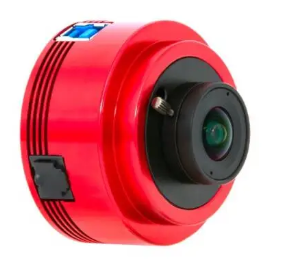
I use an ASI 662 that costs about $300 and you can read my review here.
You can also get a device called an MSM (for Move Shoot Move, that you mount a camera too. It rotates at exactly the speed as the earth’s spin letting you take photos of galaxies, stars and planets with extremely long shutter speeds.
My review of one is here, and the company has released a newer model since that time.
An Astronomy Must Have
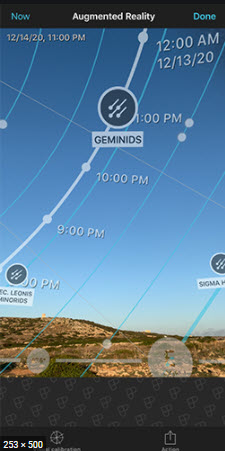
Whatever you decide to use (or start with, an invaluable assistant is a piece of software that is an APP for your smartphone or tablet called PhotoPills, and it costs less than AUD$20 from the Play Store or App Store.
I reviewed it here.
Incidentally, PhotoPills is NOT just for astrophotographers; there are many, many features and functions non-astro snappers can use too.
I mention this specifically at the moment as last week the PhotoPills team put together a complete Masterclass run through of the app on YouTube. It lasts for around 2 hours but covers every single aspect of using the software to get the very best from it.
You can watch it here.
I have a number of stories and tutorials on my website covering astrophotography and video. Click here to see a list of them.
And with Christmas coming (and Black Friday sales), what better time to hint hint to love ones …?