
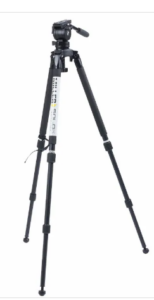
Reviewing the Belkin Creator Kit last week reminded that not all tripods are equal.
No, I am NOT saying the tripod included with the kit is a bad tripod, I am saying that not all tripods are equal.
Let me explain.
The Belkin Creator Kit tripod is a lightweight unit designed to be easily carried, but more importantly, is designed primarily to be used with a smartphone. Yes, the information says it’s good for a 2Kg weight, but that doesn’t mean it will perform optimally under that sort of weight.
What do I mean? Perform? What performance does a tripod have to make? Do a song and dance routine?
No, of course not. The primary objective of any tripod is to give you a stable platform to which you can mount a camera, and there are considerations you need to make when you buy one, rather than just slapping down a few dollars on something that looks like it’ll do the trick.
Let me break it down.
The Head
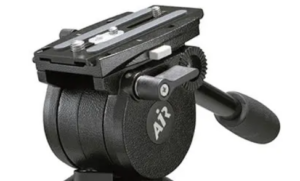
Quite easily the most important component of any tripod is the head – the bit that has the plate to which you affix the camera. The head is what allows you to achieve smooth pans and tilts, and the best type any respectable shooter would use is called a ‘floating’ head.
A fluid head lets you pan and tilt at varying speed throughout the movement without having any jerkiness or ‘stickiness’ in the movement.
And as an aside, this is another great Aussie invention, patented in 1946 by Eric Miller, whose name is now emblazoned on many think is the best tripod made in the world.
Also pay attention to the base plate on the head. Does it allow quick removal of the camera? Can it be setup in such a way that you still have access to replace batteries or memory cards for example. And finally, does it have a spirit level built-in to ensure you can get a level shot on uneven ground?
Legs
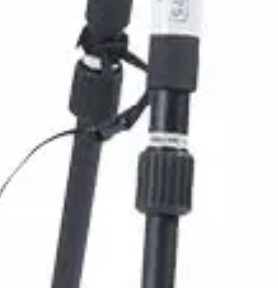
Next to look at are the legs. Are they solid and don’t ‘bow’ when the camera is added? If they do, the camera weight is too heavy for them, or they are just plain flimsy.
Are the legs easy to collapse or extend, and do the locks hold properly (cheap ones will slip over time).
The legs also dictate the height – or lack of – the tripod allows. Whilst a tripod that goes down really low has definite advantages under certain circumstances, one that allows the camera to be at eye level when you are standing is a more important feature, especially if videoing long sequences such as sport, so you don’t get backache or a cricked neck (from experience).
Speaking of the height, many tripods have the option to wind up the centre piece holding the base plate to increase the height. Avoid doing this at all costs as it negates the stability the tripod is designed to give.
Feet
The final component to check is the feet. These are what anchor the tripod firmly to the ground. Look for feet made of softer rubber, not plastic as the latter can slip on smooth surfaces. Some tripods also have built in spikes in the feet that can be pulled out, so that on surfaces like dirt, grass etc, you can make sure it is secure.
In Use
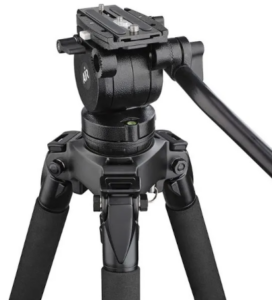
Using a tripod can take some practice to get smooth shots, especially when videoing. Get used to all the different controls for locking / unlocking and pan / tilt for example, so that when shooting, you can make adjustments without having to remove your eyes from the action – and this is especially true in sport shooting of course.
Lastly, don’t scrimp on quality. A good tripod will literally last a lifetime; a cheap one will fall apart or rust in a couple of years. Some pro shooters I know are still using old timber-based Miller tripods they purchased 30 or 40 years ago, or even longer!
My Own Tripod
For what it is worth, my own workhorse tripod is a Miller AIR Solo 75 2 Stage Alloy I have had for 4 years now, and used for both video and photography with either my Blackmagic Pocket Cinema Camera Pro 6K (or Canon EOS 5DSis and 200mm tele lens when I am shooting motor sport).
It has never missed a beat and is as solid as a rock. One major point with this tripod that sold me is that the legs are locked and unlocked by a screwing mechanism as against a flip up/down latch / clamp affair. Much more solid.
It can also be lowered so that the camera is almost at ground level in order to get some really low motor sport shots that are a bit different from the norm.
Any decent camera shop will carry stock or be able to order in for you if you are interested.
By the way, this is not an advertorial for Miller; as these are the tripods I have used, I refer to them through familiarity. Other very good tripod makers include Manfrotto, Velbon, LIBEC, Vinten and Gitzo.
One Last Thing
When should you use a tripod? The correct answer is whenever you have one with you.