
I lament the ongoing demise of the camcorder. At the consumer end, I especially lament the loss of the traditional camcorder ergonomic shape that allows you to shoot for long periods of time with little fatigue.
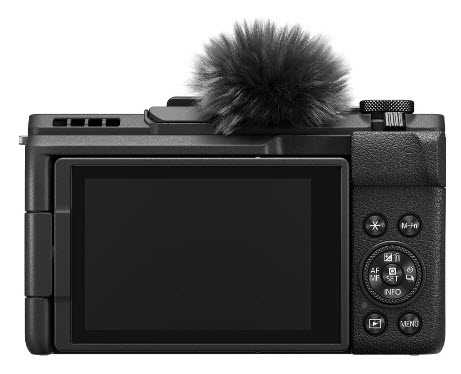
Having said the, the new-ish Canon PowerShot V1, along with using a standard compact camera type body, is also minus one of the basic elements I think any camera should have, and that is a proper viewfinder instead of just a flip out LCD screen.
I received the V1 last week, and this was the first thing I noticed after unpacking it. (The second was the weight but I’ll get to that in a moment).
Canon says the V1 is “designed to video your world wherever you go”, so straight away, I thought, “Why not? I’ll just nip outside and shoot a view clips”.
And that of course is absolutely possible, except for one small detail. Without a viewfinder, and in the bright sunlight, I could hardly see what I was framing with any clarity.

If you are a vlogger / podcaster sitting at a desk or some such thing, then in that case, the V1 is eminently suitable, but as a travelling companion? I’d suggest there are better options.
Canon’s own EOS R50 springs to mind with a higher megapixel count, both shoot at 4K (albeit the V1 having a higher frame rate) and the pricing is pretty comparable. The EOS R50 also gives the operability of interchangeable lenses of course and does have a decent viewfinder.
This is not to be confused with the R50V by the way, which Canon themselves puts in a side-by-side comparison on its website.
There are other specs of the V1 that exceed the EOS R50 I’ll admit, such as the continuous shooting speed, but on the other hand, the EOS R50 has better subject tracking.
Okay, now I have said I personally would prefer something like the EOS R50 let’s look in more depth at the V1.
Built In Goodies
You can shoot at 60p in 4K which is useful for getting higher quality footage, but not at the level true slo-mo comes into play if sporting videos such as motor racing are your thing. You need to go to 120fps or higher for that.
But for vlogging / podcasting, you have access to 14 different types of colour filters to set the mood via creative tones and contrasts. And for those bright conditions, or again for creative effects, there are three levels of ND filter built in.
You also get Canon LOG 3 thus having extended to an extended dynamic range in your shooting. You can get a more full explanation of what Log 3 actually means here if you are interested.
Let’s get back to the weight.
The V1 comes in at just under ½ kilo which is quite a heft in a side pocket, but I am guessing this extra tubbiness comes from the addition of a very good cooling fan system letting you shoot for longer without the camera overheating.
The EOS R50 with a lens attached will weigh more than the V1 certainly, and not be as compact, so the options of advanced modes and functionality giving more control is traded against the portability and ease of use.
Your call on that one then.
The PowerShot V1 has no built in flash whereas the EOS R50 does, both have built in mic and HDMI ports and the V1 has the advantage of a headphone port.
Conclusion

The Canon PowerShot V1 is undeniably a camera built for a purpose. It is easy to use straight out of the box and will satisfy the user who doesn’t want too many bells and whistles to get in the way of their shooting or snapping, whether it be vlogging, podcasting or travelogue-ing.
In addition to the features and functions already mentioned, you can also easily live stream with the V1, and Bluetooth is supported letting you take advantage of the new generation of mics from the likes of Sennheiser, DJI And RØDE for example.
Other pros include the larger sensor giving excellent video and image quality and I liked the AF and subject tracking functionality. The zoom lens at max 52mm is a tad shorter than I’d like, especially in a travel camera.
As I stated at the top of the article though, if you want more control over your imaging – still and video – I think there are better options in the Canon range to satisfy your needs. I just think the V1 will slot you into a specific hole photo and video wise, leaving little room to grow.
The Canon PowerShot V1 sells in Australia for $1449 and more info is available from the Canon Australia website.