
“Open up a stop”.
Anybody who is au fait with a still camera will understand what this phrase means. In effect it says “open the aperture of the camera by one setting” such as from f/4.0 to f/2.8, with the aim of letting in more light, thus increasing the exposure of the image.
In video terms, it’s the same except that video folk generally call it the iris not the aperture.
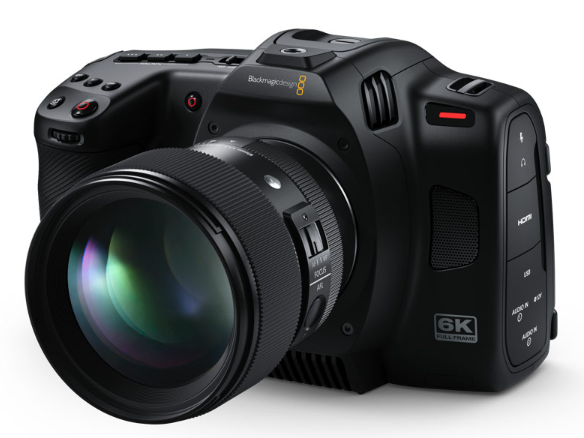
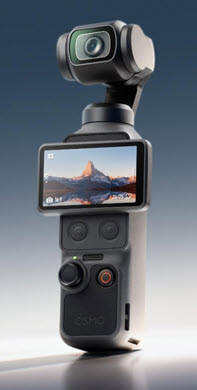
Camera manufacturers are fond of stating how many stops their particular models have. Two that immediately spring to mind that do this are models I regularly use; the Blackmagic Pocket Cinema Camera 6K Pro and the DJI Pocket 4.
So, what does it mean when a camera is described as having 13 stops of dynamic range as these two have?
As I mentioned above, “Stops” is photography’s way of measuring light in doublings — each stop up means twice as much light, each stop down means half as much light. Dynamic range is the span between the darkest shadow detail a sensor can capture and the brightest highlight detail, measured in how many of these doublings fit between them.
Speaking technically (or more correctly, mathematically) then, if the darkest recoverable shadow is 1 unit of light, then 13 stops up (13 doublings) gets you to 2¹³ = 8,192 units. That’s the ratio between the brightest and darkest tones the sensor of the camera can capture in a single exposure while still holding usable detail at both ends — a contrast ratio of about 8,192:1.
Fine. OK. But what does it MEAN in practical terms?
In Practical Terms
The more stops a camera has available, the more forgiving it will be if you are shooting say, bright skies and dark shadows. Examples are sunsets landscapes, or if you are a drone flyer, shooting the sky and the ground at the same time. The camera sensor can pick up all the different levels of light due to the wider stop range.
If your camera has fewer stops, then you need to expose for the highlights OR the shadows – you can’t have both.
It’s also important for those wizards that perform the magic art or colour grading, as the more stops available ie a wider range of exposure to play with, the more room they have to push exposure and recover shadow/highlight detail without introducing noise or banding.
When Buying a New Camera
If buying a new camera, the number of stops available is a major indicator of how good that camera is, along with number of pixels it can shoot, frame rates available and all those other factors you’d generally look at.
In the examples cited of the Blackmagic Pocket Cinema Camera 6K Pro and DJI Pocket 4, it’s telling you how much brightness and contrast those sensors can hold onto before either the shadows turn to pure black noise or the highlights clip to pure white with no recoverable detail.
Comparisons
To give you an idea of different ranges:
- Human eye: roughly 20+ stops (though not all at once — it adapts)
- High-end cinema cameras / good full-frame sensors: 13–15 stops
- Typical smartphone sensor: 9–11 stops*
- Older or budget sensors: 8–10 stops
*This is one reason that smartphones do not have as good a camera some might argue – they simply do not have the dynamic range a decent camera has.
For example, both the Panasonic LUMIX TZ300 and the Sony ZV1 M2 I reviewed recently have approximately 12.5 stops available. The sensor which gathers the light size in these cameras (1” in size) is 65% approx. larger than those in a smartphone from Samsung and Apple – hence a higher dynamic range is available.